Ki Tisa as a Song of Longing – Ex 30:11 – 34:35

Parasha Ki Tisa is a Song of both longing and danger. First, the longing. Previous to our parsha, Moses has gone up to the top of Mount Sinai, entering the cloud of God’s presence, to remain with God for 40 days (Ex 24:18). While Moses is up on Mount Sinai encountering the Divine, the children of Israel wait expectantly at the foot of Mount Sinai for Moses to return with God’s prescription for a holy life.

Now the period of time is coming to an end and the people are restless, “for this Moshe, the man who brought us up from the land of Egypt, we do not know what has become of him!” (Ex 32.1 Everett Fox translation). They go to Aaron, brother of Moses, and say to him, “Make us a god who will go before us!” (Ex 32.1 Everett Fox translation).   There follows the well-known story of the creation of the golden calf from the gold rings of the people, and of the people eating, drinking, and dancing wildly around their creation.

I would like to read the creation of the golden calf as the story of people who are yearning for God’s presence, and who do the best they can in their circumstances to fill that longing. But there is a problem with this reading, and that is where the danger comes it.   Although Moses successfully pleads with God not to destroy the people entirely (Ex. 32:31-34), nevertheless God sends a plague upon the people (Ex. 32:35). Moses himself orders the Levites to assassinate 3,000 of the Israelites. (Ex. 32:26-28). If the people were expressing longing for God, how do we understand a world in which they can be punished for doing so?

We can illuminate the Exodus text by following the ancient rabbinic tradition of reading Torah intertextually with Song of Songs.  But fair warning, the Song illuminates the danger as well as the longing.

Exodus shows us that the people bear witness to the awesome and physical presence of God on Mt. Sinai, to thunder, smoke, lightening, and shofar blasts when God reveals God’s commandments (Ex. 19:16-20:18). Aviva Zornberg says “At the moment when God spoke at Sinai, a whole nation lost consciousness and regained it.” (The Murmering Deep, pg 246). She quotes from Shemot Rabbah 29:3, which incidentally provides a good illustration of how the rabbis read Song of Songs with the Torah.

Levi said: Israel asked of God two things – that they should see His glory and hear His voice; and they did see His Glory and hear His voice, for it says, “And you said: Behold, God has shown us His glory and His greatness, and we have heard His voice out of the midst of the fire” (Deut. 5.21). But they had no strength to endure it, for when they came to Sinai and God revealed Himself to them, their souls took wing because He spoke with them, as it says, “My soul left me when he spoke” (Songs 5:6).

Zornberg suggests that the people are destabilized by “the shock of God’s voice.”  Their souls have left them. And in this destabilized condition, it appears to them that Moses has left them too. Moses has learned from God that it will be possible (and necessary) for the Israelites to build a sanctuary, so that God may dwell amongst them.   Ve-asu li mikdash, Ve-shachanti be-tocham. (Ex. 25.8). But the people do not yet know about a Mikdash where God’s Shekhina שְׁכִינָה can dwell amongst them shachanti שכנתי. Their souls have left them, and Moses has left them. They erect the golden calf.

When Moses descends from Sinai, the the Israelites are dancing around the calf. Joshua tells Moses that he hears the cry of war (kol milchamah).   However, Moses hears (Ex 32:18, translation Robert Alter)

Not the sound of crying out in triumph,
and not the sound of crying out in defeat.
A sound of crying out I hear.

Moses hears the people simply crying out, neither triumphant nor defeated. I read this as the people crying out from their souls, for God’s presence. This may remind us of Hannah’s prayer:

I pour my soul out before YHWH וָאֶשְׁפֹּךְ אֶת-נַפְשִׁי, לִפְנֵי יְהוָה.  Sam 1:15).

Like R. Levi, we can read Song of Songs with the Torah, but we read a little further in the verse and discover how the singer felt when her soul left her, how she sought but could not find her lover, as the Israelites sought and could not find Moses or God. In Chapter 5, the singer is called to the door by her beloved, but hesitates, and then:

I opened to my beloved; but my beloved had turned away, and was gone. My soul failed me [left me] when he spoke. I sought him, but I could not find him; I called him, but he gave me no answer. (Song 5:6)

As the lover called out, so too the Israelites call out with “the sound of crying out.” They don’t yet know about building a Mikdash, so they gravitate to the one thing which they know about that might bring God’s presence – the golden calf.   In this reading, they do not have intent to blaspheme, to worship idols, or to turn against their God. Yet, if they are expressing their longing for God in creating the golden calf, it seems harsh that they must be punished.   Is it for lack of faith? It still seems harsh, yet very much like a reflection of the real world.

Listen to the Song in conjunction with the punishment of people at Sinai:

And he [Moses] said unto them: ‘Thus says YHWH, the God of Israel: Put ye every man his sword upon his thigh, and go to and fro from gate to gate throughout the camp, and slay every man his brother, and every man his companion, and every man his neighbor. And the sons of Levi did according to the word of Moses; and there fell of the people that day about three thousand men. (Ex. 32:26-28).

And YHWH smote the people, because they made the calf, which Aaron made (Ex. 32:35).

Immediately after the singer of the Song laments over not finding her lover, the next verse says:

The watchmen that go about the city found me, they smote me, they wounded me; the keepers of the walls took away my mantle from me. (Song 5:7)

Who are these watchmen? It is surely dangerous to walk about the city when the very guardians of public safety are liable to beat the walker. Is the walker in a dream? Is she beaten because she is dreaming? Because she is yearning? Because the search she conducts for her lover does not fit with the societal norms of male pursuing female? The moment when the singer of the Song is beaten by the watchman, and the moment when the children of Israel are punished by God (and by Moses), are awe-full moments. Their hearts were full of longing, and then, wham! There are other, and plentiful, times of joy, of success in finding. But punishments are troubling and remind us that the world, then and now, is not always a safe place in which to be out and to follow one’s heart.

Here is the text of Song 5:2-8 in its entirety.

 אֲנִי יְשֵׁנָה, וְלִבִּי עֵר; קוֹל דּוֹדִי דוֹפֵק, פִּתְחִי-לִי אֲחֹתִי רַעְיָתִי יוֹנָתִי תַמָּתִי–שֶׁרֹּאשִׁי נִמְלָא-טָל, קְוֻצּוֹתַי רְסִיסֵי לָיְלָה. 2 I sleep, but my heart waketh; Hark! my beloved knocketh: ‘Open to me, my sister, my love, my dove, my undefiled; for my head is filled with dew, my locks with the drops of the night.’
ג  פָּשַׁטְתִּי, אֶת-כֻּתָּנְתִּי–אֵיכָכָה, אֶלְבָּשֶׁנָּה; רָחַצְתִּי אֶת-רַגְלַי, אֵיכָכָה אֲטַנְּפֵם. 3 I have put off my coat; how shall I put it on? I have washed my feet; how shall I defile them?
ד  דּוֹדִי, שָׁלַח יָדוֹ מִן-הַחֹר, וּמֵעַי, הָמוּ עָלָיו. 4 My beloved put in his hand by the hole of the door, and my heart was moved for him.
ה  קַמְתִּי אֲנִי, לִפְתֹּחַ לְדוֹדִי; וְיָדַי נָטְפוּ-מוֹר, וְאֶצְבְּעֹתַי מוֹר עֹבֵר, עַל, כַּפּוֹת הַמַּנְעוּל. 5 I rose up to open to my beloved; and my hands dropped with myrrh, and my fingers with flowing myrrh, upon the handles of the bar.
ו  פָּתַחְתִּי אֲנִי לְדוֹדִי, וְדוֹדִי חָמַק עָבָר; נַפְשִׁי, יָצְאָה בְדַבְּרוֹ–בִּקַּשְׁתִּיהוּ וְלֹא מְצָאתִיהוּ, קְרָאתִיו וְלֹא עָנָנִי. 6 I opened to my beloved; but my beloved had turned away, and was gone. My soul failed me when he spoke. I sought him, but I could not find him; I called him, but he gave me no answer.
ז  מְצָאֻנִי הַשֹּׁמְרִים הַסֹּבְבִים בָּעִיר, הִכּוּנִי פְצָעוּנִי; נָשְׂאוּ אֶת-רְדִידִי מֵעָלַי, שֹׁמְרֵי הַחֹמוֹת. 7 The watchmen that go about the city found me, they smote me, they wounded me; the keepers of the walls took away my mantle from me.
ח  הִשְׁבַּעְתִּי אֶתְכֶם, בְּנוֹת יְרוּשָׁלִָם:  אִם-תִּמְצְאוּ, אֶת-דּוֹדִי–מַה-תַּגִּידוּ לוֹ, שֶׁחוֹלַת אַהֲבָה אָנִי. 8 ‘I adjure you, O daughters of Jerusalem, if ye find my beloved, what will ye tell him? that I am love-sick.’


Pre-Purim Shabbat Morning and Potluck Lunch March 19, 2016

Join Ruach HaYam on March 19, 2016, for a queer Saturday morning Shabbat service followed by potluck lunch and learn on Esther. Arrive at 9:30am to schmooze and help set up. Service will begin at 10am.

We will hold services at Congregation Eitz Chayim, 136 Magazine Street, Cambridge, MA.   Please RSVP here and let us know if you would like to read from the Torah, give a dvar on Parashat Vayikra, or bring in your own comments on Esther to study over lunch,

For the potluck please bring veggie/dairy food. We will not be heating food. Pre-packaged food should be hechshered.

Although Ruach HaYam speaks with a queer Jewish voice, we welcome persons of all gender and faith identities. We worship without a mechitza, and with acoustic music only. We have our own siddur. Our services and study sessions are warm, meaningful, collaborative, lead to deepening of friendships, and are simply fabulous.

Please share event widely!

Rebecca, Isaac, Jacob and Esau: A Queer Look at Family, Love, Jealousy and Gender in the Hebrew Bible (February 25, 2016)

Ruach HaYam Workshop at Congregation Eitz Chayim, Cambridge, MA
Join us for an interactive study of Rebecca, Isaac, Jacob and Esau. Study will be led by Penina Weinberg. 6:45 pm for schmooze. Bring veggie snacks if you wish.
Study will begin promptly at 7:15pm.
Congregation Eitz Chayim 136 Magazine Street, Cambridge, MA
February 25, 2016
 

We’ll do a close reading of the story of Isaac, Rebecca, Jacob and Esau. We’ll follow through on what we learned from Song of Songs 8:6

For love is as strong as death [“The love which Isaac bore to Esau” –from Song of Songs Rabbah]

Jealousy as harsh as Sheol [“The Jealousy which Esau bore against Jacob” –from Song of Songs Rabbah]We will study the way in which Rebecca may be seen to inherit the mantles of both Abraham and Sarah, and to occupy a gender space both male and female. We will consider whether Jacob can be read as transgender and/or as a person whose true voice is never heard.

Penina Weinberg has been teaching Hebrew Bible for over 10 years and is determined for people to claim and own the text for themselves. She holds a Masters Degree in Jewish Studies from Hebrew College. 

And the Fire Flashed all Around: Introduction to Song of Songs (January 28, 2016)

Ruach HaYam Workshop at Congregation Eitz Chayim, Cambridge, MA
Join us for an interactive text study of the Song of Songs. Study will be led by Penina Weinberg. 6:45 pm for shmooze. Bring veggie snacks if you wish.
Study will begin promptly at 7:15pm.
Congregation Eitz Chayim 136 Magazine Street, Cambridge, MA
January 28, 2016
 
“And the fire flashed all around.”
>> What does flashing fire have to do with Song of Songs? <<
 
“I am my beloved’s and my beloved is mine.”
>> How did this sensual love poem find its way into the Hebrew Bible? <<
 
“For love is fierce as death…a blazing flame”
>> On a cold winter’s night, you do not want to miss this opportunity to ignite the fires of your souls with Song of Songs. <<
Join us as we discover Song of Songs through text study, discussion, pictures, and music. Like Ben Azzai, we will link up the words of the Torah with the Writings, until the fire flashes all around. Sunglasses are recommended. Knowledge of Hebrew and prior text study experience are not required.
Penina Weinberg has been teaching Hebrew Bible for over 10 years and is determined for people to claim and own the text for themselves. She holds a Masters Degree in Jewish Studies from Hebrew College. 

THE SOUL OF DAVID (December 17 2015)

Ruach HaYam workshop at Congregation Eitz Chayim

Join Ruach HaYam for an interactive text study of the soul of David. Study will be led by Penina Weinberg on December 17, 2015 at Congregation Eitz Chayim, 136 Magazine Street, Cambridge, MA. Join us at 6:45 pm for shmooze. Bring veggie snacks if you wish. Study will begin promptly at 7:15pm.    Parking is allowed within a three block radius on event nights.

According to the Book of Samuel, “The soul of Jonathan was knit with the soul of David, and Jonathan loved him as his own soul.” (1 Sam 18:1). Our study will ask the question, who did David love and what was the nature of that love? We will study David’s speech upon the death of Jonathan (2 Samuel Chapter 2) along side David’s speech upon the death of his first son by Bathsheba (2 Samuel Chapter 12). We will consider the love which Michal expressed for David (1 Samuel Chapter 18) and, time permitting, the relationship between David and Bathsheba.

Study is geared for learners at all levels. You will be guided through a careful look at many Hebrew words but neither a knowledge of Hebrew nor prior text study experience is required.

Penina Weinberg has been teaching Hebrew Bible for over 10 years and is determined for people to claim and own the text for themselves. She holds a Masters Degree in Jewish Studies from Hebrew College. 

MOTHERHOOD, MANHOOD AND WAR: A QUEER LOOK AT GENDER AND POWER IN THE SONG OF DEBORAH (November 12, 2015)

Ruach HaYam Workshop at Congregation Eitz Chayim, Cambridge, MA

A close reading of Deborah, Jael, Sisera’s mother, Sisera, and Barak to see what we can learn about stereotypical gender roles, non-normative gender roles, and how power is wielded. We also consider the nature of war.

READING DEBORAH, JAEL AND SISERA’S MOTHER (JUDGES 4-5). A QUEER CONVERSATION ABOUT WOMAN (August 2015)

Nehirim Women’s Retreat – Workshop

Here we are at a Women’s retreat. What does that word mean to us? Did we come because it is a woman’s retreat, or despite the label? Does the tag, name, identity, of woman sit comfortably with us, uncomfortably, indifferently, fluidly, or perhaps not at all? We will jump start a conversation about identity with a study of three interrelated, but quite different, women in the Bible. Deborah the judge and warrior, Jael the dangerous hostess, and Sisera’s mom, who glorifies war and is a tragic figure. Only Deborah is an Israelite. All are found in Judges 4 and 5. Come for a text study and a conversation about gender identity.

Ruach HaYam Shabbat Retreat October 17, 2015

Ruach HaYam invites you to a full day Shabbat retreat
for LGBTQ Jews and friends and family in Cambridge, MA
Our theme for this year is “Full Spectrum Judaism: the Gift of the Rainbow”

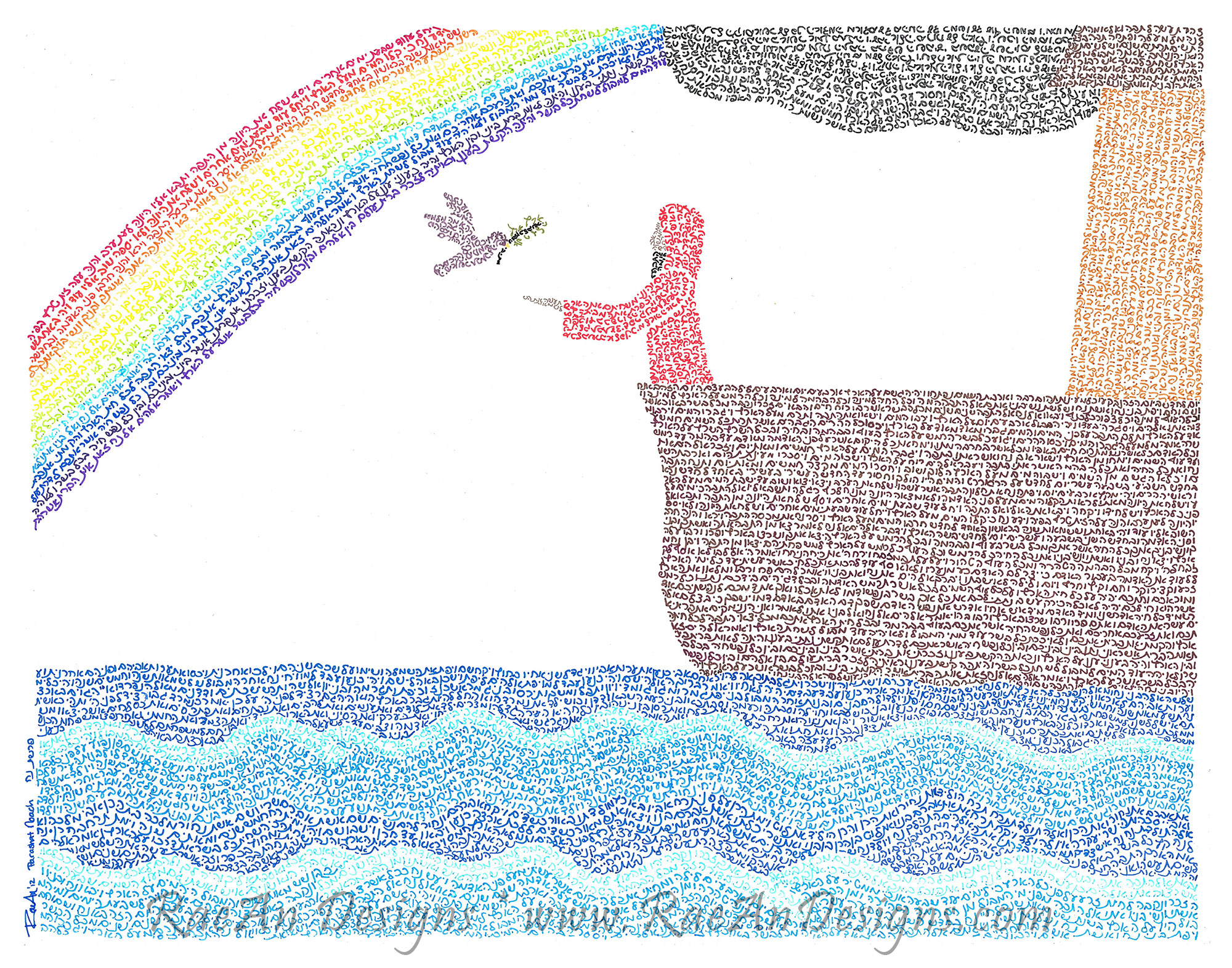
Micrography used by permission. For more information visit artist Rae Antonoff at www.RaeAnDesigns.com or https://www.facebook.com/RaeAnDesigns

Micrography “Parashat Noach” used by permission. Visit artist Rae Antonoff at www.RaeAnDesigns.com or https://www.facebook.com/RaeAnDesigns

Refresh your spirit and make new friends in this fabulous day of egalitarian davening, creative and thoughtful workshops,
and delicious kosher food!

Ruach HaYam, in partnership with Congregation Am Tikva, and with the co-sponsorship of Congregation Eitz Chayim and Keshet, is presenting our third annual full day Shabbat retreat for LGBTQ Jews and friends and family.

October 17, 2015, from 9:30am to 7:30pm at Congregation Eitz Chayim, 136 Magazine Street, Cambridge, MA 02139

We also invite you to join Congregation Eitz Chayim for Kabbalat Shabbat services on Friday, October 16, 2015.

PRE-REGISTRATION IS REQUIRED
REGISTER  HERE

View comments from previous Retreats here!

Ruach HaYam Ruach HaYam welcomes queer Jews, friends, allies, family, and interfaith connections to our events. We organize short and all day Shabbat events, as well as queer Jewish text studies in the Boston area through out the year.  We worship without a mechitza, with acoustic music only, and with our own siddur. Services are warm, meaningful, collaborative, lead to deepening of friendships, and are simply fabulous. Full day Shabbat retreats include scholarly and experiential workshops and plenty of time to schmooze.

Please join our EVENT on facebook and/or become a member of Ruach HaYam FB GROUP or Meetup GROUP to stay in touch throughout the year.


Schedule for October 17, 2015
(see below for faculty and leader biographies)

Services

9:30 am to Noon – Led by members of Congregation Am Tikva.  Siddur for Shabbat morning prepared by Marvin Kabakoff and Penina Weinberg.

Lunch 

Noon to 1:30 pm

Workshops

1:45 to 3:00 – Penina Weinberg. Full Spectrum Judaism: The Gift of the Rainbow.  What actually is the gift of the Rainbow?  We’ll look at Parashat Noach and selected other texts and see if we can determine what the gift might be.  Interactive discussion for all levels of text learners.

3:15 to 3:45 – Mimi Yasgur. Time for a 7th inning stretch! Loosen those muscles and take a moment… We’ll do some simple stretching and breathing, and we’ll get your circulation flowing for the next activity!

4:00 to 5:15 – Rachie Lewis. The Flood, Climate Change and Questioning Authority.  Challenging our institutions has been a common thread throughout the Jewish textual tradition. In this session we will look at the implications of our weekly parsha on the current problem of climate change and seek guidance from our text in how we challenge the current systems standing in the way of progress

Closing

5:30 to 7:00 – Meal/ Melave Malka,
7:00 Havdalah and Closing Circle
Jeremy Sher

Retreat Director
Penina WeinbergIMG_4002 is an independent biblical scholar who is President Emerita of Congregation Eitz Chayim in Cambridge, MA. and the founder of Ruach HaYam.  Her studying and teaching focus a queer lens on issues of gender, power, and identity in the Hebrew Bible. Penina teaches in Boston area synagogues, and has led many workshops for Nehirim and Keshet.  This is her third year as Ruach HaYam retreat director.
Partner
Congregation Am Tikva, since 1976,Am Tikva Black2 has been providing a safe and welcoming space for GLBT Jews in the Boston area to pray together and to socialize. It created its own gender-neutral prayerbooks and customs for Friday evening services, the high holidays, and special events, such as the Erev Pride Liberation Seder. Am Tikva is a mixture of genders and sexualities who come from a variety of Jewish backgrounds. The services reflect that variety. Am Tikva offers two Friday evening services a month, one more contemporary and one more traditional, as well as High Holiday services and celebrations of other queer and Jewish holidays.
Faculty and Leaders
Marvin Kabakoff graduated from BrandeisMarvin Kabakoff and received a Ph.D. in history from Washington University-St. Louis.  He is recently retired as an archivist with the National Archives and Records Administration at their regional facility in Waltham, and is an adjunct in the Simmons Library School.  Marvin attended a community Hebrew school and Hebrew High School in New Haven, and has been a long-time service leader at Am Tikva.


Rachie Lewis has lived in Boston for 4 yearsRachie and works with local synagogues on social justice issues. In her spare time, she loves learning and travels between different progressive and traditional communities to meet all of her social and spiritual needs, but hopes that some day, those needs will be met in one place!


Jeremy Sher  is a student for rabbinic ordination of Rabbi Natan Margalit.  He is a Master of Divinity candidate at Harvard Divinity School, where he was honored with the Ministry Fellowship, as well as the Frederick Sheldon Traveling Fellowship for a year of research in Israel, which he just completed.  Author of the upcoming new book A Jewish Approach to Nonprofit Governance (Chaim Mazo Publishers), Jeremy has served on eight boards and in numerous other volunteer roles over 20 years of service.  He lives in Cambridge and is a certified mediator, MBTA busker, and avid cyclist. See his website, ThisIsJudaism.net


Mimi Yasgur, M.A., is an expressive arts therapistMimi water and  mental health counselor. She is the Senior Services Clinician and group therapist at the New England Center for Homeless Veterans. She enjoys integrating her passions for art, Judaism, and spirituality to create vibrant community.


Ruach HaYam Spring Shabbat Morning Service and Potluck

Join Ruach HaYam for a queer Saturday morning Shabbat service and potluck lunch.
Saturday, April 18  at 9:30am
Congregation Eitz Chayim, 136 Magazine Street, Cambridge, MA.

Celebrate the coming of Spring and study parashat Shimini.

For the potluck bring cold veggie/dairy food. If brought in a package, food must be hechshered. Please register and let us know what you will be bringing. If you would like to read from the Torah let us know also. Sign up on facebook and leave a comment, or reply to this post.

We will have a text study over lunch – brought to us by Dev Singer over at Nice Jewish Queer Folk, http://www.meetup.com/Nice-Jewish-Queer-Folk/

THE CREATION OF GENDER.
Genesis 1:27 reads “God created the adam in God’s image; in the image of God [God] created him — male and female [God] created them.” What does this verse mean? How were the genders brought into existence according to the Tanakh? This text study will explore how rabbis explain this through the generations.