Ki Tisa as a Song of Longing – Ex 30:11 – 34:35

Parasha Ki Tisa is a Song of both longing and danger. First, the longing. Previous to our parsha, Moses has gone up to the top of Mount Sinai, entering the cloud of God’s presence, to remain with God for 40 days (Ex 24:18). While Moses is up on Mount Sinai encountering the Divine, the children of Israel wait expectantly at the foot of Mount Sinai for Moses to return with God’s prescription for a holy life.

Now the period of time is coming to an end and the people are restless, “for this Moshe, the man who brought us up from the land of Egypt, we do not know what has become of him!” (Ex 32.1 Everett Fox translation). They go to Aaron, brother of Moses, and say to him, “Make us a god who will go before us!” (Ex 32.1 Everett Fox translation).   There follows the well-known story of the creation of the golden calf from the gold rings of the people, and of the people eating, drinking, and dancing wildly around their creation.

I would like to read the creation of the golden calf as the story of people who are yearning for God’s presence, and who do the best they can in their circumstances to fill that longing. But there is a problem with this reading, and that is where the danger comes it.   Although Moses successfully pleads with God not to destroy the people entirely (Ex. 32:31-34), nevertheless God sends a plague upon the people (Ex. 32:35). Moses himself orders the Levites to assassinate 3,000 of the Israelites. (Ex. 32:26-28). If the people were expressing longing for God, how do we understand a world in which they can be punished for doing so?

We can illuminate the Exodus text by following the ancient rabbinic tradition of reading Torah intertextually with Song of Songs.  But fair warning, the Song illuminates the danger as well as the longing.

Exodus shows us that the people bear witness to the awesome and physical presence of God on Mt. Sinai, to thunder, smoke, lightening, and shofar blasts when God reveals God’s commandments (Ex. 19:16-20:18). Aviva Zornberg says “At the moment when God spoke at Sinai, a whole nation lost consciousness and regained it.” (The Murmering Deep, pg 246). She quotes from Shemot Rabbah 29:3, which incidentally provides a good illustration of how the rabbis read Song of Songs with the Torah.

Levi said: Israel asked of God two things – that they should see His glory and hear His voice; and they did see His Glory and hear His voice, for it says, “And you said: Behold, God has shown us His glory and His greatness, and we have heard His voice out of the midst of the fire” (Deut. 5.21). But they had no strength to endure it, for when they came to Sinai and God revealed Himself to them, their souls took wing because He spoke with them, as it says, “My soul left me when he spoke” (Songs 5:6).

Zornberg suggests that the people are destabilized by “the shock of God’s voice.”  Their souls have left them. And in this destabilized condition, it appears to them that Moses has left them too. Moses has learned from God that it will be possible (and necessary) for the Israelites to build a sanctuary, so that God may dwell amongst them.   Ve-asu li mikdash, Ve-shachanti be-tocham. (Ex. 25.8). But the people do not yet know about a Mikdash where God’s Shekhina שְׁכִינָה can dwell amongst them shachanti שכנתי. Their souls have left them, and Moses has left them. They erect the golden calf.

When Moses descends from Sinai, the the Israelites are dancing around the calf. Joshua tells Moses that he hears the cry of war (kol milchamah).   However, Moses hears (Ex 32:18, translation Robert Alter)

Not the sound of crying out in triumph,
and not the sound of crying out in defeat.
A sound of crying out I hear.

Moses hears the people simply crying out, neither triumphant nor defeated. I read this as the people crying out from their souls, for God’s presence. This may remind us of Hannah’s prayer:

I pour my soul out before YHWH וָאֶשְׁפֹּךְ אֶת-נַפְשִׁי, לִפְנֵי יְהוָה.  Sam 1:15).

Like R. Levi, we can read Song of Songs with the Torah, but we read a little further in the verse and discover how the singer felt when her soul left her, how she sought but could not find her lover, as the Israelites sought and could not find Moses or God. In Chapter 5, the singer is called to the door by her beloved, but hesitates, and then:

I opened to my beloved; but my beloved had turned away, and was gone. My soul failed me [left me] when he spoke. I sought him, but I could not find him; I called him, but he gave me no answer. (Song 5:6)

As the lover called out, so too the Israelites call out with “the sound of crying out.” They don’t yet know about building a Mikdash, so they gravitate to the one thing which they know about that might bring God’s presence – the golden calf.   In this reading, they do not have intent to blaspheme, to worship idols, or to turn against their God. Yet, if they are expressing their longing for God in creating the golden calf, it seems harsh that they must be punished.   Is it for lack of faith? It still seems harsh, yet very much like a reflection of the real world.

Listen to the Song in conjunction with the punishment of people at Sinai:

And he [Moses] said unto them: ‘Thus says YHWH, the God of Israel: Put ye every man his sword upon his thigh, and go to and fro from gate to gate throughout the camp, and slay every man his brother, and every man his companion, and every man his neighbor. And the sons of Levi did according to the word of Moses; and there fell of the people that day about three thousand men. (Ex. 32:26-28).

And YHWH smote the people, because they made the calf, which Aaron made (Ex. 32:35).

Immediately after the singer of the Song laments over not finding her lover, the next verse says:

The watchmen that go about the city found me, they smote me, they wounded me; the keepers of the walls took away my mantle from me. (Song 5:7)

Who are these watchmen? It is surely dangerous to walk about the city when the very guardians of public safety are liable to beat the walker. Is the walker in a dream? Is she beaten because she is dreaming? Because she is yearning? Because the search she conducts for her lover does not fit with the societal norms of male pursuing female? The moment when the singer of the Song is beaten by the watchman, and the moment when the children of Israel are punished by God (and by Moses), are awe-full moments. Their hearts were full of longing, and then, wham! There are other, and plentiful, times of joy, of success in finding. But punishments are troubling and remind us that the world, then and now, is not always a safe place in which to be out and to follow one’s heart.

Here is the text of Song 5:2-8 in its entirety.

 אֲנִי יְשֵׁנָה, וְלִבִּי עֵר; קוֹל דּוֹדִי דוֹפֵק, פִּתְחִי-לִי אֲחֹתִי רַעְיָתִי יוֹנָתִי תַמָּתִי–שֶׁרֹּאשִׁי נִמְלָא-טָל, קְוֻצּוֹתַי רְסִיסֵי לָיְלָה. 2 I sleep, but my heart waketh; Hark! my beloved knocketh: ‘Open to me, my sister, my love, my dove, my undefiled; for my head is filled with dew, my locks with the drops of the night.’
ג  פָּשַׁטְתִּי, אֶת-כֻּתָּנְתִּי–אֵיכָכָה, אֶלְבָּשֶׁנָּה; רָחַצְתִּי אֶת-רַגְלַי, אֵיכָכָה אֲטַנְּפֵם. 3 I have put off my coat; how shall I put it on? I have washed my feet; how shall I defile them?
ד  דּוֹדִי, שָׁלַח יָדוֹ מִן-הַחֹר, וּמֵעַי, הָמוּ עָלָיו. 4 My beloved put in his hand by the hole of the door, and my heart was moved for him.
ה  קַמְתִּי אֲנִי, לִפְתֹּחַ לְדוֹדִי; וְיָדַי נָטְפוּ-מוֹר, וְאֶצְבְּעֹתַי מוֹר עֹבֵר, עַל, כַּפּוֹת הַמַּנְעוּל. 5 I rose up to open to my beloved; and my hands dropped with myrrh, and my fingers with flowing myrrh, upon the handles of the bar.
ו  פָּתַחְתִּי אֲנִי לְדוֹדִי, וְדוֹדִי חָמַק עָבָר; נַפְשִׁי, יָצְאָה בְדַבְּרוֹ–בִּקַּשְׁתִּיהוּ וְלֹא מְצָאתִיהוּ, קְרָאתִיו וְלֹא עָנָנִי. 6 I opened to my beloved; but my beloved had turned away, and was gone. My soul failed me when he spoke. I sought him, but I could not find him; I called him, but he gave me no answer.
ז  מְצָאֻנִי הַשֹּׁמְרִים הַסֹּבְבִים בָּעִיר, הִכּוּנִי פְצָעוּנִי; נָשְׂאוּ אֶת-רְדִידִי מֵעָלַי, שֹׁמְרֵי הַחֹמוֹת. 7 The watchmen that go about the city found me, they smote me, they wounded me; the keepers of the walls took away my mantle from me.
ח  הִשְׁבַּעְתִּי אֶתְכֶם, בְּנוֹת יְרוּשָׁלִָם:  אִם-תִּמְצְאוּ, אֶת-דּוֹדִי–מַה-תַּגִּידוּ לוֹ, שֶׁחוֹלַת אַהֲבָה אָנִי. 8 ‘I adjure you, O daughters of Jerusalem, if ye find my beloved, what will ye tell him? that I am love-sick.’


Jeroboam and the loss of inheritance [nachalah]

In our class on Kings, we often read that such and such a king was as evil as Jeroboam son of Nebat, and/or will suffer his fate.   For example, after King Ahab’s wife Jezebel has Naboth killed, and Ahab takes possession of Naboth’s vineyard, the prophet Elijah says to Ahab:

Behold, I will bring evil upon thee, and will utterly sweep thee away, and will cut off from Ahab every manchild, and him that is shut up and him that is left at large in Israel. And I will make thy house like the house of Jeroboam the son of Nebat, and like the house of Baasa the son of Ahijah, for the provocation wherewith thou hast provoked Me, and hast made Israel to sin. [I Kgs 21:21-22].

In seeking to understand exactly what Jeroboam did that was so nefarious, one class member suggested that it might be related to the way in which King Ahab and Queen Jezebel tried to alienate Naboth from his vineyard, from the inheritance [nachalah] of his ancestors.  For in this matter, Jezebel and Ahab are subject to the same curse and manner of death as Jeroboam.

Jeroboam enters our narrative as he raises up his hand against King Solomon [I Kgs 11:26] and runs to Egypt to escape being killed by Solomon.  After Solomon’s death, Jeroboam is called back to be the leader of the opposition in the north to Solomon’s son and heir apparent, Rehoboam.

Rehoboam refuses to promise the northern tribes that he will remove from them the burden of taxation and forced labor imposed upon them by Solomon.  When the northern tribes (called Israel) see that Rehoboam will not harken to them, they say to King Rehoboam (who is the representative of the house of David, son of Jesse):

‘What portion  [chelek] have we in David? neither have we inheritance [nachalah] in the son of Jesse; to your tents, O Israel; now see to thine own house, David. [I Kgs 12:16]

And here we have the beginning of the division of the monarchy into the northern kingdom of Israel and the southern kingdom of Judah.  Certainly Jeroboam will be remembered for more than one nefarious deed – we have not even mentioned his encouraging the people to bring the golden calves into their worship (join us on March 25th as we study Jeroboam and the calf worship).  Yet it seems that there is a clear connection between Ahab who alienates Naboth from the inheritance [nachalah] of his ancestors, and Jeroboam whose leadership results in the northern tribes losing the inheritance [nachalah] of the house of David.  We understand why Ahab therefore will suffer the same fate as Jeroboam.

March Schedule

Chaverim,

Here is our upcoming schedule
Weds Feb 25: Intensive on Jezebel – limited to regular class participants only
Weds Mar 04: NO CLASS – join us at EC for ~~~~PURIM!!!!!~~~~
Weds Mar 11: Intensive on Jeroboam and the division of the monarchy – limited to regular class participants only
Weds Mar 18: REGULAR CLASS continues – come one come all!!!!
Weds Mar 25: Intensive on TBD – limited to regular class participants only
Thereafter:
1st and 3rd Weds – continue REGULAR CLASSES as always
2nd and 4th Weds – Intensive study on varying topics open ONLY to regular class participants
I hope that anyone who has been holding back due to weather will make a special effort to come on March 18. Mark your calendars now. Let’s get SPRING in our minds.

King David as Inspiration

Despite his rascally ways, King David holds his place in our tradition as a source of inspiration. Though he is shown in the book of Samuel to be a guerrilla warrior, an uncertain lover, a not entirely loyal friend, and not always a dedicated father, yet he triumphs in establishing his kingdom. The book of Kings tells us David is a model, who was loyal to YHWH. For David’s sake, Solomon and his son are allowed to hold on to the united kingdom. And in the world to come, David’s lineage will once again return. Despite the destruction of the temple, twice, it seems there is an eternal hope that someday the world will again be in good order.

Study 1 Kings with Penina on January 8, 2014

We had an amazing discussion in our class on December 18, 2013, about the Presence, corporeal or otherwise, of the Divine in the Temple.   Who, or what exactly came into the Temple once Solomon built it?  And was Solomon sort of Moses-like, or was he trying to cloak himself in Moses’ mantle for political reasons?   On January 8, 2014, we will pick up the discussion at 1 Kings 8.43.

By Jan 15 we should be up to the Queen of Sheba.  I read the opening stanza from “The Visit of the Queen of Sheba” by Yehuda Amichai 12/18/13.  I must say it was variously received.  We’ll look at it again on January 15th.  Come hear it for yourself and express your own opinions!

As always, no Hebrew is required, learning is at all levels.  Feel free to bring wine or other beverage and snacks.    See you at 7:30pm at Congregation Eitz Chayim, 136 Magazine Street, Cambridge, MA.

Rosh Hashanah Speech 2013

Speech I gave as President to Congregation Eitz Chayim, Fall 2013

Welcome

Thanks to Rabbi Stern, Cantor Debby Gelber, School Director Laurie Shapiro, Administrator Judy Lavine, Interim Adminstrator Dennis Friedler, the High Holy Day crew, represented by our venue coordinator, Armond Cohen, to the Board of Directors and the Committee Chairs, and many individuals whose hard work throughout the year has once again brought us to the space to celebrate the New Year together.   Welcome to members and visitors who are celebrating with us.

What I wanted to talk about today, is what it takes to build and sustain our remarkable Congregation. By way of preface, I remind us all that this year, like any other year, we celebrate victories in the public sphere, but we sometimes despair of completing our dreams.   Marriage equality moves forward, but trans folk still do not have the protection of law that guarantees free access in public accommodations; Egypt holds free elections, and the military deposes the president;  We celebrate 50 years since Martin Luther King’s “I Have a Dream” speech at the 1963 March on Washington, with an African American President and Attorney General, while the Supreme Court overturns key provisions in the Voters Rights Act of 1965.

What we do here at Eitz Chayim is: we create a Jewish home, within which we can educate our children, study as adults, worship, support our members throughout the lifecycle and work on tikkun olam, repair of the world.

Our texts teach us what it takes to building the building.   In Exodus, the children of Israel built the Mishkan, the itinerant tabernacle. God gave them an exact blueprint in advance, and they followed that blueprint. They participated with from a willing heart, nediv lev – they willingly brought the fruits of their labors, their jewels and treasure, and they had the advantage of knowing exactly what to do.

Fast forward to Solomon, who built the Temple in Jerusalem. Those of you who study the book of Kings with me this year will go into this story in great detail, but I want to highlight a few things. Solomon did not have a divine blueprint; Solomon was immensely wealthy; amongst the laborers were courve, or forced laborers.   Solomon built the temple according to his plan, with his wealth, and not everyone came with a willing heart. Yet this was the temple that endured for over 1000 years, being rebuilt once. Because, look here, Solomon says in 1 Kings:

1 Kings Ch 8, [17] Now it was in the heart of David my father to build a house for the name of the Eternal, the God of Israel. [18] But the Eternal said to David my father: Whereas it was in your heart to build a house for my name, you did well that it was in your heart; [19] nevertheless you will not build the house; but your son that shall come forth out of thy loins, he shall build the house for My name.

Now, David had to be disappointed not to build that temple. One day while I was pondering my remarks for today, I was listening on the radio, and I head a very familiar voice talking about what God might have said to David:

“You had the desire to do it; you had the intention to do it; you tried to do it; you started to do it. And I bless you for having the desire and the intention in your heart. It is well that it was within thine heart.”

The speaker went on to say:

So many of us in life start out building temples: temples of character, temples of justice, temples of peace. And so often we don’t finish them. Because life is like Schubert’s “Unfinished Symphony.” At so many points we start, we try, we set out to build our various temples. And I guess one of the great agonies of life is that we are constantly trying to finish that which is unfinishable…

And each of you this morning in some way is building some kind of temple. The struggle is always there. It gets discouraging sometimes. It gets very disenchanting sometimes. Some of us are trying to build a temple of peace. We speak out against war, we protest, but it seems that your head is going against a concrete wall. It seems to mean nothing. And so often as you set out to build the temple of peace you are left lonesome; you are left discouraged; you are left bewildered.

Well, that is the story of life. And the thing that makes me happy is that I can hear a voice crying through the vista of time, saying: “It may not come today or it may not come tomorrow, but it is well that it is within thine heart. It’s well that you are trying.”

Clipped on 26-August-2013, 11:02:27 PM from “Unfulfilled Dreams”**

That speaker was Dr Martin Luther King, 1968, in a sermon called Unfulfilled Dreams. Now, I say: This is a different kind of heart, David’s heart, what I call the prophetic heart, which he passed to Solomon, lev shomea, a heart of understanding, a seeing mind. David inherited that heart from his great grandmother, Ruth; he was anointed as king by the prophet Samuel, whose great heart came from his mother Hannah.

So what does that tell us?   We don’t have a perfect blueprint laid out for us to build our temple, our shul. Neither do we have the wealth of Solomon, although we have very generous members and friends. Still, there is a form of a blueprint on our hearts, on our lev shomea and there is strength in our hands and in our willingness of heart, nediv lev.

A President of Eitz Chayim, I urge you to bring your willing hearts, and your understanding hearts and to remember throughout the year, that in order for Eitz Chayim to continue to be a home for all of us, generous contributions of talent and financial support are needed.   Whether you are a member, or a visitor who counts on finding Eitz Chayim when you need us, please help out during out appeals, and don’t hesitate to phone the office if you have a special talent you would like to share.

We CAN build our shul, AND we need to give ourselves a break as we navigate the chasm between our dreams and our realities, as outlined by Dr Martin Luther King. In the well-known words of our own sage, Rabbi Tarfon: “It is not incumbent upon you to complete the work, but neither are you at liberty to desist from it.

L’shanah tova

II Sam Ch 17 – Wed April 3 – 7:30pm to 9:00pm


All are welcome, whether regular attendees or first time visitors: prior text study experience is not necessary.

Absalom has his father King David on the run, across the Jordan River.  Why is King David running?  Who are the unsung heroic women who help King David’s spies warn him to move away from danger?  Why are so many of David’s sons and nephews fighting amongst themselves? Come to class on Wednesday to find the answers to these questions, and to ask many questions for which there will be no answers!

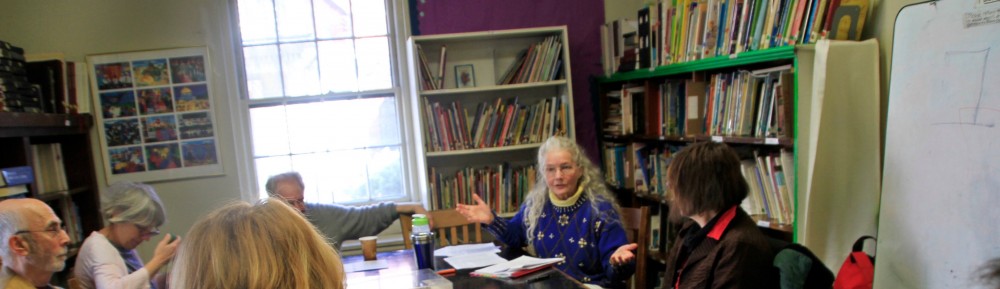
Study with Penina: 1st and 3rd Wednesday evenings
Now in our 4th year on the Early Prophets
Eitz Chayim, 136 Magazine Street, Cambridge

  • Study is in English, interfaith and gender sensitive.
  • Bring your Tanakh (Bible) if you have one; books are provided as needed.
  • Feel free to bring snacks or a bottle of wine.

I  look forward to learning with you!

Reading Ruth as a Tapestry

I am very excited to be teaching at Brookline Community Beit Midrash

5 week series between Pesach and Shavuot

4/8/13, 4/15/13, 4/22/13 (self-study on 4/29/13), 5/6/13, 5/13/13

I’m calling the series Reading Ruth as Tapestry. We will engage in a close reading of the Book of Ruth, making meaning as though we were weaving a tapestry.  Our warp consists of the major themes: Ruth and Shavuot; David’s ancestors; individuals in relationship to community and the divine.  Our woof contains the modes of interpretation: our own reading; the Sages; modern –  including feminist, queer and traditional; woodcut art.  Study will be multi level and accessible to all.

The Brookline Community Beit Midrash (BCBM) is a warm and welcoming, non-denominational community of engaged and committed learners who meet weekly at Congregation Kehillath Israel on Monday nights, 7-9pm. BCBM believes that an energized learning atmosphere leads to a stronger community, new friendships, and a deeper connection to our Jewish tradition.  BCBM is centered on the principle that Torah should be accessible to all who wish to learn.

For information on the Brookline Community Beit Midrash, you may

2 Samuel Chapter 16 – March 20

Study with Penina March 20, 7:30pm.
Regularly 1st and 3rd Wednesday evenings
Congregation Eitz Chayim 136 Magazine Street, Cambridge

The story of King David continues to be a messy family story.  His sons and nephews are at odds with each other; who should get the throne is not clear.  Women in this chapter will only suffer.  As Samuel said in Book I: “I will call unto YHVH to send thunder and rain;  and you shall know and see that your wickedness is great, which you have done in the sight of YHVH, in asking a king for yourselves.”  (1 Sam 12:17).

  • Study is in English, interfaith and gender sensitive.
  • Bring your Tanakh (Bible) if you have one; books are provided as needed.
  • Feel free to bring snacks or a bottle of wine.

All are welcome, whether regular attendees or first time visitors: prior text study experience is not necessary.

I  look forward to learning with you!